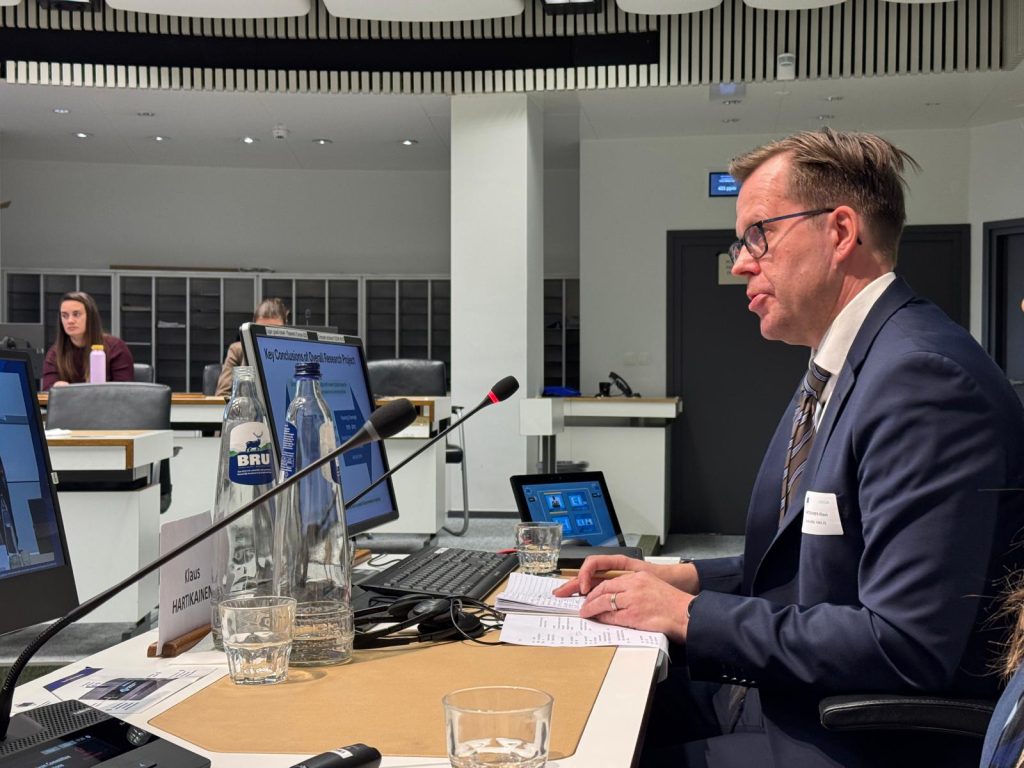

The European Network of Agricultural Journalists (ENAJ) hosted its second symposium in Brussels on March 26, 2026. The half-day event focused on how journalists specialised in agriculture can cut through complexity, strengthen public understanding of the agricultural sector and remain credible in a rapidly changing media landscape.
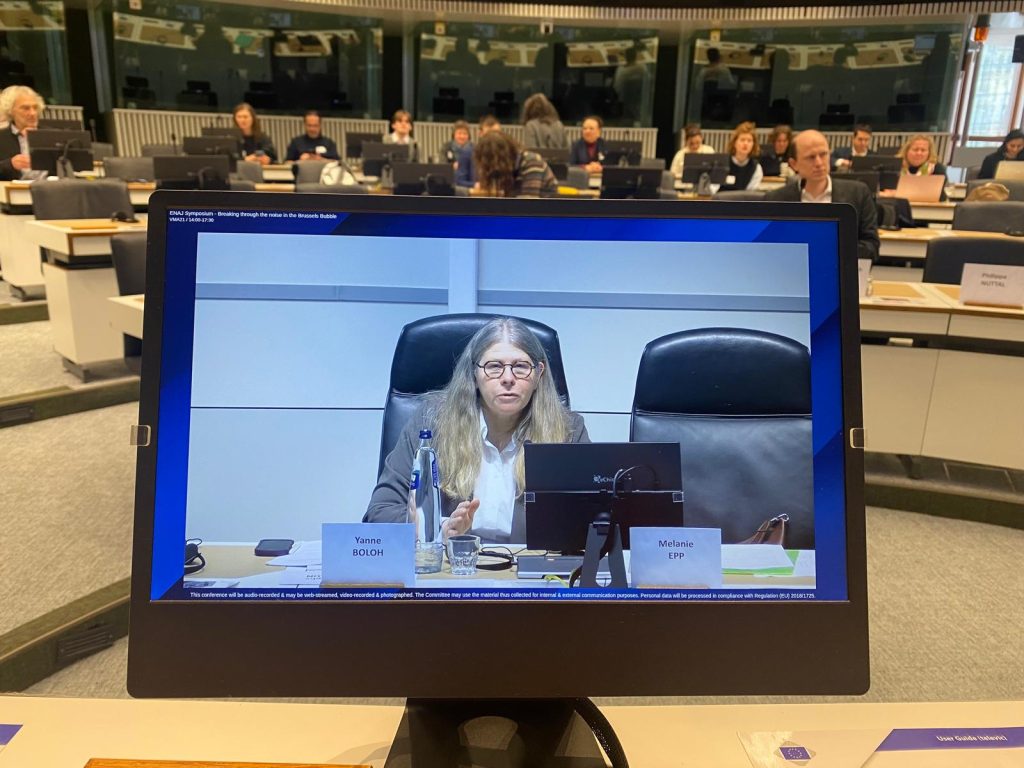
A recording of the symposium is now available on YouTube here.
In his welcome address, Michele Cercone, Deputy Director for Communication at the European Committee of the Regions recognised that EU communication often fails to reach citizens beyond the “Brussels bubble,” making journalists essential for translating complex policy into clear, accessible information at the local level.
In her keynote address, Julie Majerczak of Reporters Without Borders offered a stark message about the state of journalism globally, offering insight into uniquely European challenges. Journalism, she said, is facing multiple, overlapping crises, including growing political and economic pressures, as well as disruptive influence of digital platforms. She said press freedom is deteriorating globally, increasingly within democratic countries, where trust in media continues to decline.
Social media platforms, she said, amplify misinformation and overshadow reliable sources, while capturing a large share of advertising revenue that traditionally supported journalism. Majerczak highlighted EU efforts such as the European Media Freedom Act and anti-SLAPP directive as important steps, but said their effectiveness will depend on enforcement. She also called for stronger regulation of digital platforms and measures to ensure access to trustworthy information, warning that weakening journalism poses a broader risk to democratic systems.
“Without informed citizens, there is no democracy,” she said.
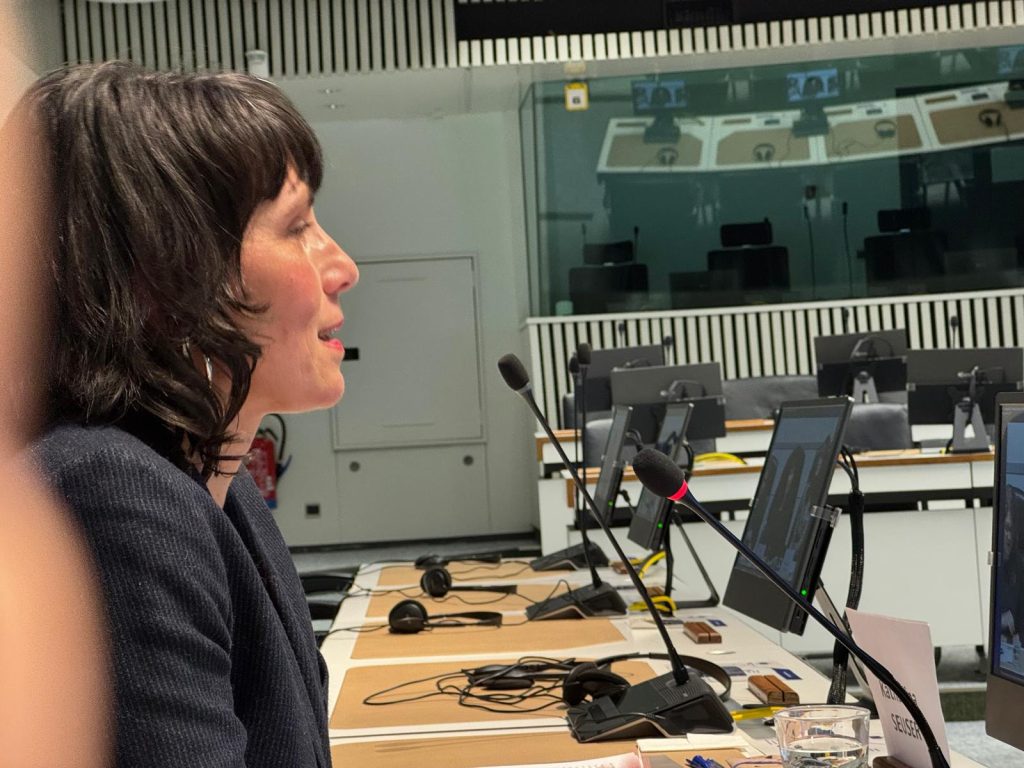
In a presentation on how agricultural journalists report on innovation, Bonn-Rhine-Sieg University professor Katharina Seuser said research shows agricultural journalists place strong emphasis on independence and see their role as both informing farmers and explaining agriculture to a broader public.
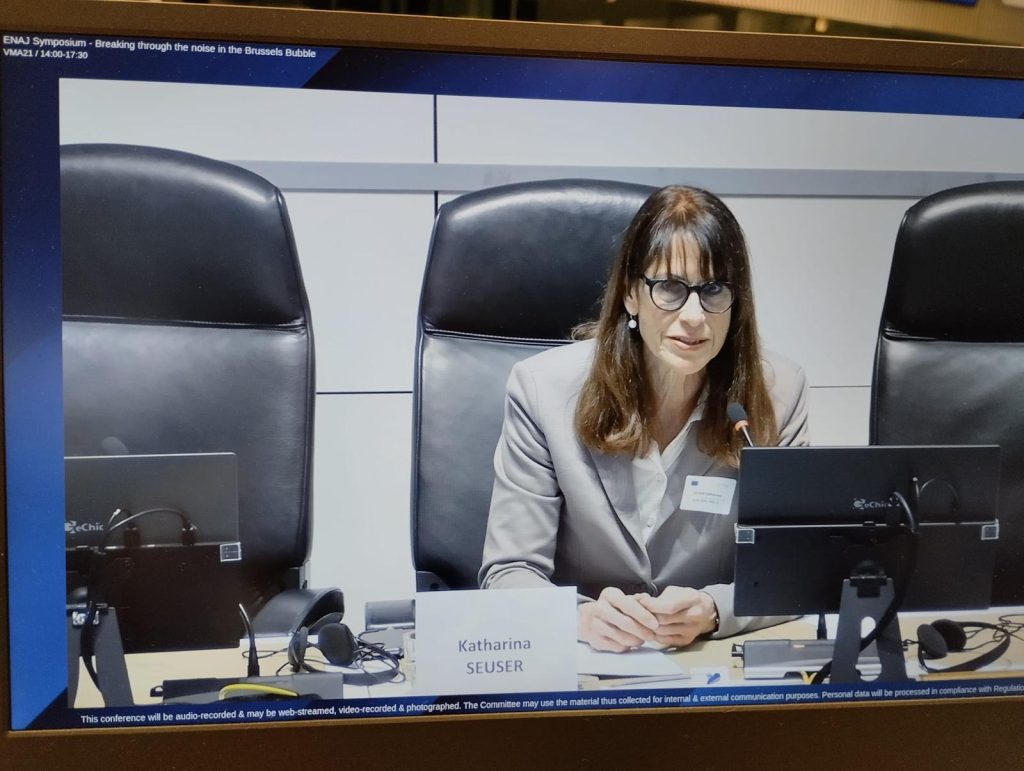
Reporting on innovation requires careful judgement. Journalists must distinguish between genuine advances and marketing claims while keeping content practical and relevant. The study found that most information is gathered directly on-farm to ensure credibility, and storytelling often relies on real-world examples that farmers can apply. At the same time, journalists are adapting to faster, digital-first publishing while managing pressure from interest groups and limited resources, all within an increasingly complex and technical agricultural landscape.
In the symposium’s first panel, three Brussels-based journalists specialised in agriculture shared how they gather information and report in a policy environment that is often shaped by competing narratives, limited access and fast-moving developments.
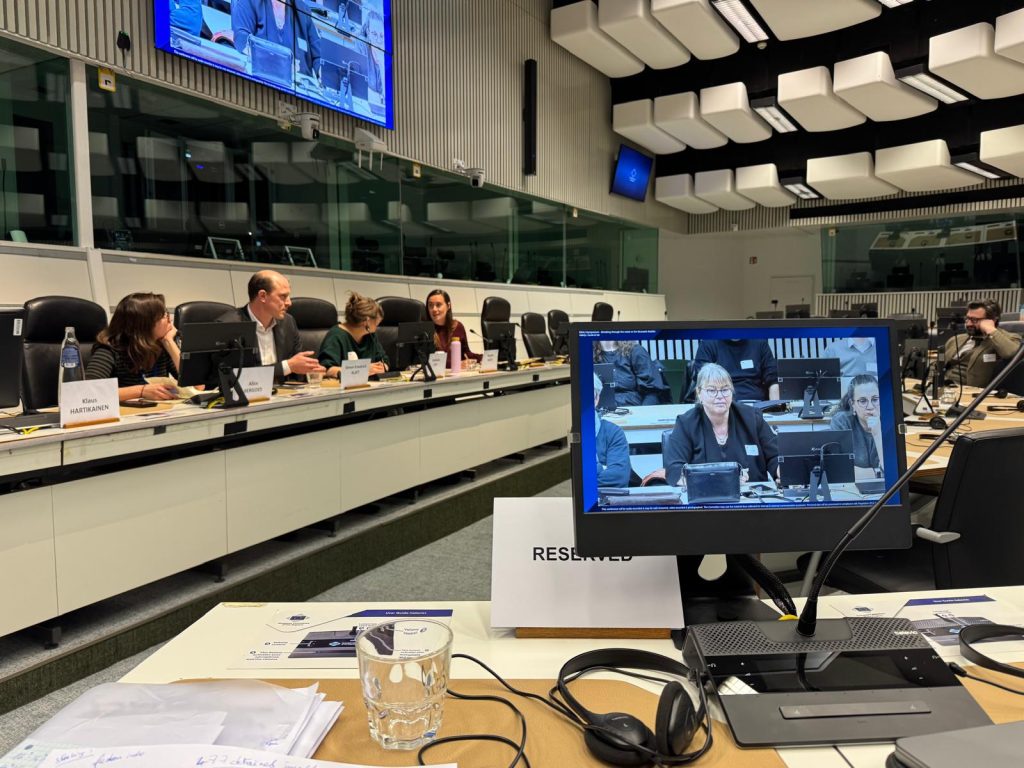
In describing a typical work week, Natasha Foote, a freelance journalist, shared the importance of on-the-ground reporting and maintaining relationships with sources, including farmers, to inform her work. Simon Klatt of Agra Europe outlined a structured approach, planning coverage around expected policy developments while contacting institutions and stakeholders to verify information. Alice Bergöend of Euractiv highlighted the role of teamwork and daily coordination in tracking legislative files and producing continuous coverage.
A central theme of the panel was the increasing difficulty of accessing information. Klatt said access to policymakers and background briefings has become more restricted over time, making it more difficult to obtain timely and detailed insights into policy developments. Foote echoed this, describing growing reluctance among sources to speak on the record and a broader tightening of control over communication from institutions.
“To this day, I think I never had a technical briefing about the CAP,” she said. “Getting information about that was genuinely painful.”
Bergöend noted that access varies by institution, with the European Parliament remaining relatively open compared to the Commission and Council.
The panellists also addressed how they determine what to report in a crowded information space. Bergöend stressed the importance of focusing on original sources and maintaining balance, while all three highlighted the need for strong editorial judgement when dealing with leaks and competing narratives. They noted that leaked information plays a role in reporting but must be handled carefully, with attention to timing, motivation and public interest.
The discussion also touched on the pressures of digital publishing and competition within the Brussels media environment, where speed and exclusivity can shape editorial decisions. All three emphasised the importance of maintaining independence, particularly in the face of attempts by institutions or stakeholders to influence coverage or control messaging.
“We definitely can see that there are more and more efforts to control what we are doing, how we are doing it, and to try to intervene into our job,” said Klatt.
Finally, the panellists highlighted the importance of connecting policy reporting to real-world agriculture. While time and resources can limit opportunities, they agreed that engagement with farmers and on-farm realities remains essential for understanding the impact of EU policy and for producing meaningful, relevant journalism.
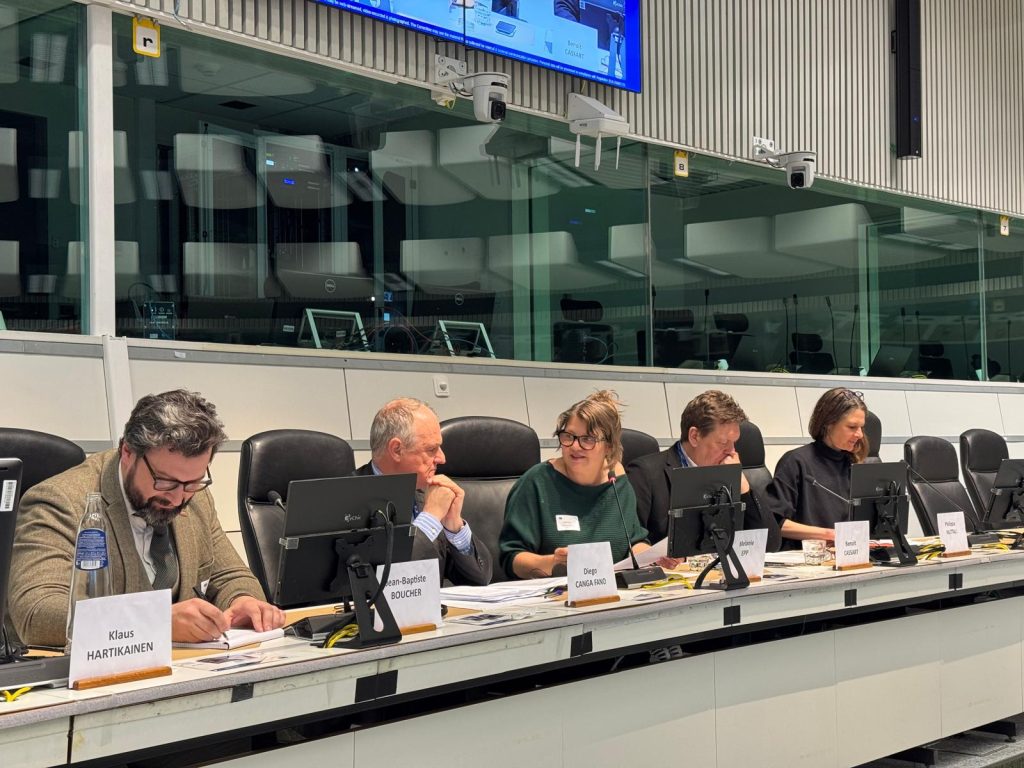
During the second panel discussion, M. Diego Canga Fano (DG AGRI), Jean-Baptiste Boucher (Copa-Cogeca), Benoît Cassart (MEP) and Philippa Nuttall (Sustainable Views) examined how leaks, misinformation and communication practices shape trust in agricultural policy within the Brussels policy environment.
Canga Fano emphasised the shared responsibility of institutions and media to support informed public debate, highlighting the Commission’s focus on proactive communication, fact-checking and targeted responses to misleading narratives. He stressed the importance of providing clear, accessible information while avoiding the amplification of misinformation.
Boucher offered a detailed view of how leaks function within Brussels, describing a spectrum ranging from strategic disclosures to unintended releases and deliberate exposure of internal discussions. He said this “culture of leaks” creates both opportunities and risks, and explained that Copa-Cogeca does not comment on leaks in order to avoid reinforcing political strategies or spreading unverified information. He also cautioned that debates around misinformation often become unproductive when framed as opposing claims, arguing instead for a deeper examination of underlying perceptions and a stronger connection to on-the-ground realities.
“When I go back to the farm on the weekend and I listen to the conversation we have, and then I come back on the Monday morning in Brussels, I have the feeling we’re completely disconnected,” Boucher said.
In his comments, Cassart focused on persistent misconceptions in agricultural debates, particularly around livestock production. Public discussion, he said, is often driven by incomplete or misleading narratives on issues such as climate change, nutrition and animal welfare. He called for more science-based, holistic approaches that reflect the full role of agriculture in food systems and rural economies.
Nuttall highlighted the structural pressures facing journalists, noting that increasingly complex and fast-changing policy cycles make it difficult to maintain clear, consistent narratives. She pointed to the growing challenge of accessing timely, relevant information and said constant revisions and delays lead to audience fatigue and confusion.
“How do you keep the story rolling for readers when one minute you’re telling them something’s been implemented, and then it might be rolled back, and then it’s changing,” she said.
Nuttall also stressed the importance of engaging a broader range of voices, including farmers, and creating more opportunities for direct interaction beyond the Brussels bubble.
Across the discussion, speakers pointed to a widening gap between policy debates in Brussels and the realities of farming. They agreed that rebuilding trust requires clearer communication, better access to information and stronger links between institutions, journalists and the agricultural sector, particularly through more grounded, context-driven reporting and engagement.
Both panels were moderated by Canadian agricultural journalist and ENAJ secretary Melanie Epp.
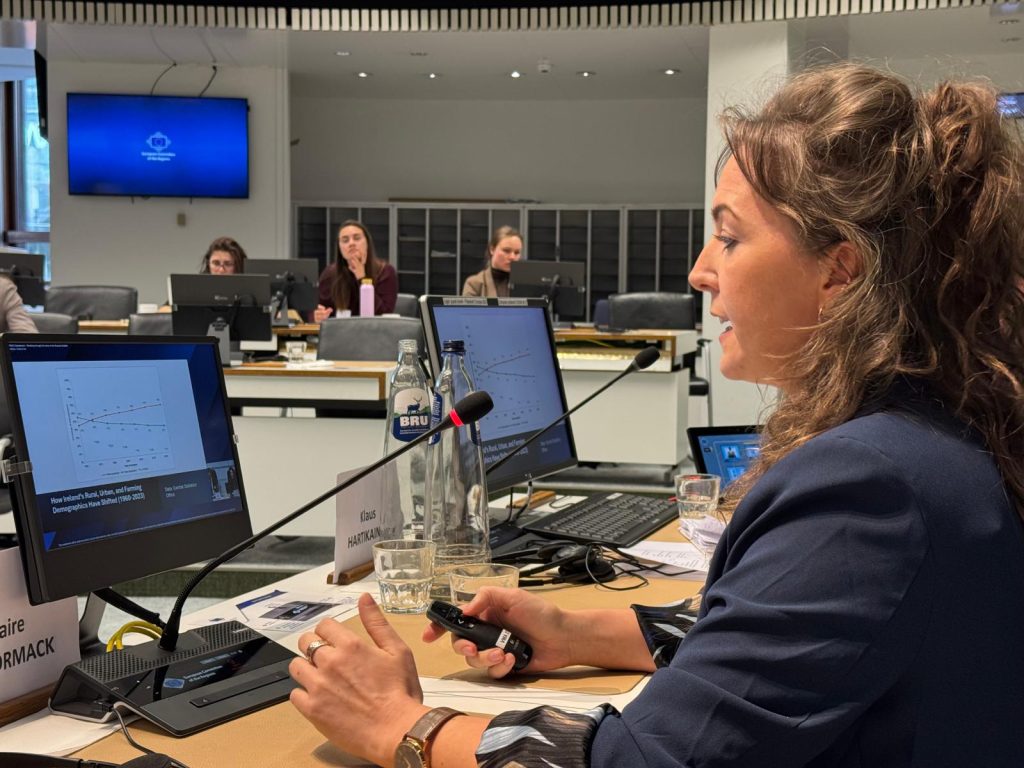
In the final session of the day, Claire Mc Cormack of University College Dublin presented findings from her PhD research analysing long-term trends in Irish print media coverage of agriculture from 1970 to 2019.
Her research showed a widening gap between mainstream and specialist farming media. While farming publications maintained consistent, production-focused coverage centred on economic and industry issues, mainstream media attention declined over time and shifted toward broader societal themes, including politics, environment and consumer issues.
Mc Cormack found that mainstream coverage of agriculture has become less frequent, less prominent and more event-driven, often intensifying only during periods of crisis. By contrast, farming media provided earlier, more continuous and more detailed reporting, remaining closely aligned with the lived realities of farmers.
She also identified changes in sourcing and framing. Mainstream media increasingly rely on political actors and civil society groups, while farming media continue to prioritise traditional agricultural sources. At the same time, mainstream coverage has put greater emphasis on conflict and more negative headlines.
Overall, Mc Cormack concluded that these diverging trends in coverage contribute to differing public and sectoral understandings of agriculture, which have direct implications for public discourse, policy development and communication within the sector.
“Media coverage of agriculture affects perception,” she said. “It affects how people talk about these issues on the ground, and it mobilises both consumers and farmers.”
As the symposium discussions came to a close, on the main message became clear: Going forward, agricultural journalism will need to be more connected, more critical and more outward-facing to remain relevant in an increasingly complex information environment.
ENAJ’s management committee would like to thank the speakers and guests for their participation, the Committee of the Regions for hosting the event, and EuroCommerce for providing the light lunch and drinks. We hope this event serves as a good first step towards bridging gaps, sharpening reporting and ensuring agricultural policy is understood beyond the Brussels bubble.